


May 7, 2026 - National Retail Group
Commercial Property Leasing Trends Shaping Australia’s Retail Market
Category : Retail
Share:


Latest News
-
Shop for Lease vs Shop for Sale: Which Is Better for Your Business?
June 30, 2026 - National Retail Group -
Long-Term vs Short-Term Leases: Which Is Better for Your Medical or Retail Business?
April 29, 2026 - National Retail Group -
Medical Clinic and Rooms for Lease: What You Really Need to Know Before Signing
April 23, 2026 - National Retail Group -
What Tenants Ask Most: Top FAQs in Melbourne Commercial Leasing
March 26, 2026 - National Retail Group -
Retail Shop Leasing Mistakes First-Time Business Owners Make
February 17, 2026 - National Retail Group -
Commercial Real Estate for Lease: Retail vs Office vs Industrial Spaces
February 6, 2026 - National Retail Group -
What Tenants Ask Most: Top FAQs in Melbourne Commercial Leasing
December 9, 2025 - National Retail Group -
South Melbourne’s rare island property sold
November 25, 2025 - National Retail Group -
National Retail Group secures rare South Melbourne island site off-market & below replacement cost
- National Retail Group -
Nigel Satterley Targets $1B Commercial Pipeline: What It Means for Retail & Medical Assets
November 18, 2025 - National Retail Group -
Chemist Warehouse Founders’ $5b Property Push: Retail & Medical Outlook
October 30, 2025 - National Retail Group -
Brisbane CBD Office Market: $19m Acquisition Signals Investor Confidence
- National Retail Group -
Landmark building in Adelaide’s Rundle Mall sold to National Retail Group
October 23, 2025 - National Retail Group -
$150m Rathdowne town centre set for build-start anchored by Coles supermarket
- National Retail Group -
Office Space Leasing Terms Explained: What You Need to Know
September 2, 2025 - National Retail Group -
How a Commercial Buyer Advocate Can Improve Your Investment Portfolio
August 19, 2025 - National Retail Group -
How Asset Management Maximizes Wealth for Private Families
July 31, 2025 - National Retail Group -
Your Guide to Commercial Property Leases
July 9, 2025 - National Retail Group -
Exploring Leasing of Retail Space in Melbourne
May 2, 2025 - National Retail Group -
Securing High-Quality Tenants: Proven Strategies for the Commercial Landlords in Melbourne
April 17, 2025 - National Retail Group -
The Future of Office Space for Lease Melbourne: Trends and Insights
March 19, 2025 - National Retail Group -
25 Lease Terms Every Medical and Retail Tenant Should Know
November 25, 2024 - National Retail Group -
Avoiding Common Landlord Pitfalls with Expert Asset Management
July 18, 2024 - National Retail Group -
Importance of Professional Asset Management: Maximising Your Rental Income
May 29, 2024 - National Retail Group -
The Role of An Asset Manager: What Landlords Should Expect
May 23, 2024 - National Retail Group -
Why Every Landlord Needs a Skilled Asset Manager: Key Benefits Unveiled
May 13, 2024 - National Retail Group -
How to Choose the Right Asset Manager: A Guide for Australian Landlords
May 2, 2024 - National Retail Group -
Aussie mall named one of world’s most expensive shopping strips
January 9, 2024 - National Retail Group -
Commercial Property Renting Checklist 2026
January 1, 2024 - National Retail Group -
Tips for Finding the Perfect Shop for Lease for Your Business
December 7, 2023 - National Retail Group -
The Impact of Location on Your Office Space Rental Decision
November 28, 2023 - National Retail Group -
Bunnings hardware sites hit the market
November 22, 2023 - National Retail Group -
Valmorbida family sell ex-GJ Coles store to Chemist Warehouse executives
November 21, 2023 - National Retail Group -
Opening auction bid leaves other buyers in dust
November 20, 2023 - National Retail Group -
New and improved shopping experience
September 20, 2023 - National Retail Group -
Epsom Village shopping centre overhaul will include big names
July 25, 2023 - National Retail Group -
Crowdfunding aims to raise $3 million towards buying the Tote
March 11, 2023 - National Retail Group -
Former Dimmeys Arcade in Townsville’s CBD to be revitalised after 15 years
March 8, 2023 - National Retail Group -
Country department store sold to Chemist Warehouse interests
February 10, 2023 - National Retail Group -
Amendment to Epsom village plan paves way for intersection upgrade
January 27, 2022 - National Retail Group -
Leasing Commercial Property for Small Business – 4 Factors to Consider
July 17, 2021 - National Retail Group -
FOR LEASE | INNER CITY HQ | PRESTON | STAND ALONE TWO LEVEL BUILDING
July 8, 2021 - National Retail Group -
AWH confirms location of upcoming COVID-19 vaccination clinic in Wodonga
June 2, 2021 - National Retail Group -
The mega makeover coming for the city
May 27, 2021 - National Retail Group -
The Commons – An exciting new retail precinct in the heart of Townsville
April 30, 2021 - National Retail Group -
Professional Office For Lease In Werribee Now Available
March 16, 2021 - National Retail Group -
11 Things to Consider Before Leasing Commercial Property
February 22, 2021 - National Retail Group -
Ten Questions To Ask Before You Sign Commercial Property Lease
January 23, 2021 - National Retail Group -
Landlords are not the enemy
April 2, 2020 - National Retail Group -
5 reasons to Lease next to Chemist Warehouse and create powerhouse traffic generation for your business!
March 16, 2020 - National Retail Group
Categories

Let’s be honest – the Australian retail property market has had a rough few years. Between the pandemic chaos, cautious investors sitting on their hands, and consumers changing their habits almost overnight, it has been a wild ride for landlords and tenants alike in Australia. But here is the thing: the dust is settling, and what is emerging on the other side is actually pretty exciting.
At NRG, we have been in this game for over 20 years – working across Australia, New Zealand and as far afield as New York. We have seen the market at its best and its worst, and right now? It is genuinely one of the more interesting periods we have seen in a long time. So let us walk you through what is happening on the ground in Australia’s commercial property leasing market.
Commercial Property Leasing in Melbourne: A Market Finding Its Feet
Melbourne’s real estate market suffered harder than that of most Australian cities during the post-pandemic years – and catching up here has taken a bit longer too. But things are clearly moving in the right direction now, and the numbers back that up.
Prime net effective rents in Melbourne rose 4 per cent in 2025 – the strongest annual growth since 2019 – with gains recorded across virtually all premium assets. That kind of broad-based growth tells you demand isn’t just trickling in at the top end – it is spreading through the market more generally. In terms of commercial property leasing Melbourne market has lots of potential to explore.
And investors focused on Melbourne’s vacancy figures may be missing the bigger picture – a coming slowdown in new supply that is set to tighten conditions considerably. In plain terms, less new stock coming to market means the space available now looks a lot more valuable in a year or two. That is a window worth taking seriously. If you are thinking of commercial property leasing, Melbourne is the right market for you to consider.
Commercial Property Lease in Melbourne: Market Changes Worth Knowing About
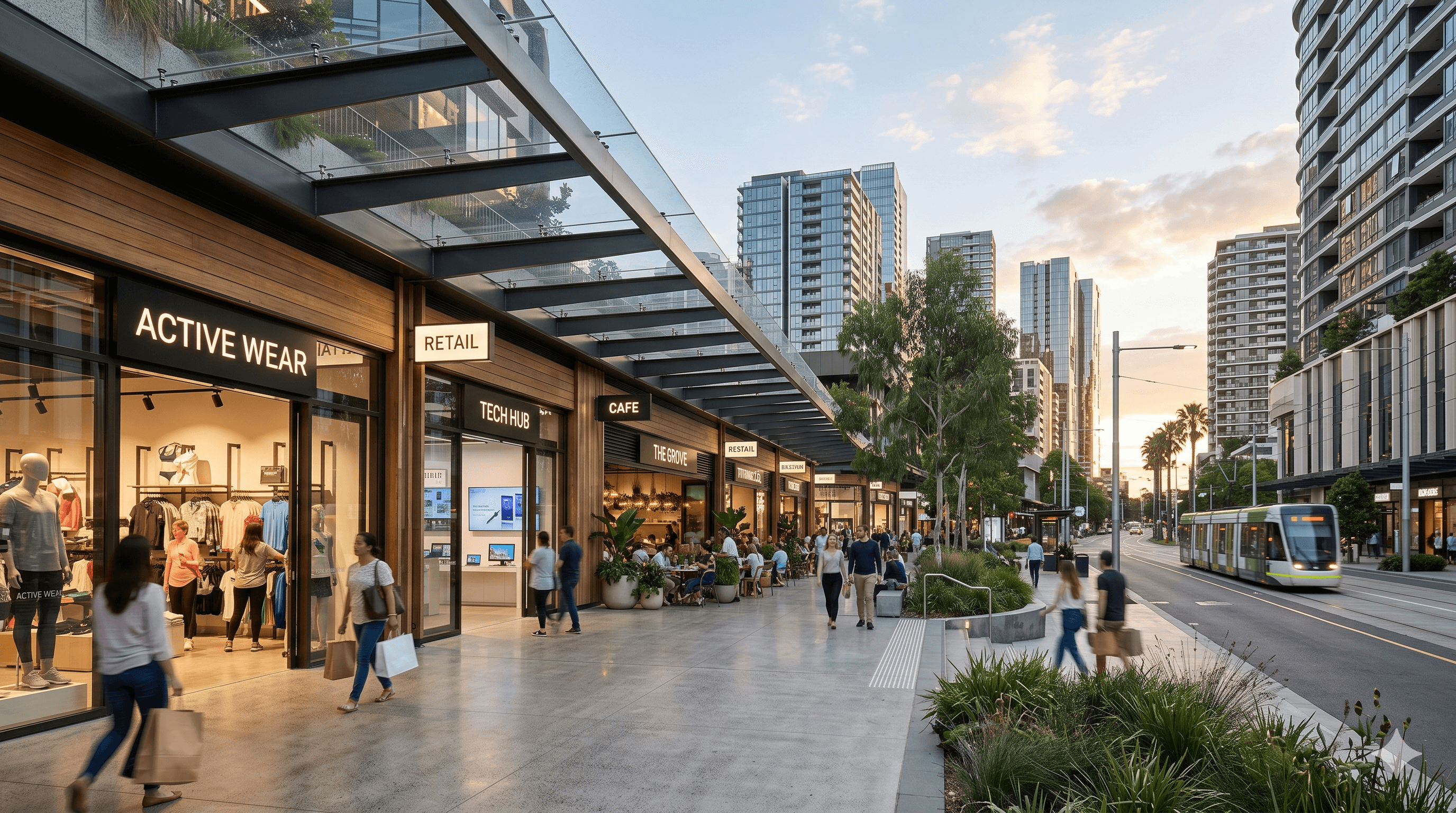
Now Melbourne’s leasing market isn’t the same as it was even two or three years ago, and if you are navigating it with old assumptions, you might be leaving money on the table – or paying too much for the wrong space. Today, if you are taking a commercial property on lease, Melbourne can be your destination in Australia.
Melbourne’s CBD leasing market is beginning to stabilise after an extended period of subdued demand, with early signs of recovery emerging through late 2025 – particularly in prime-grade assets, as tenants are increasingly prioritising quality, flexibility and location over cost alone. The “take what you can get” mentality of the uncertain years is being replaced by something more considered. Businesses are thinking carefully about how their space actually works for them – not just whether they can afford it.
On the retail investment side, things are also moving in Melbourne. Victoria’s retail property trade rose 4.1 per cent year-on-year till June 2025 – well above the prior year’s 1.7 per cent growth –with over $500 million in retail property transacting in just the first half of 2025, attracting both local and offshore capital. Half a billion dollars in half a year. That is a market with real momentum.
Retail Leasing Demand in Melbourne
Here is one of the most interesting things happening in Melbourne’s retail market right now. Shoppers aren’t just heading out to buy stuff – they are heading out for something to do. And the retailers and landlords who have cottoned onto this are reaping the rewards.
Major national and international retailers are committing to Melbourne’s core retail grid, with a clear trend towards larger, flagship-style stores and experience-driven formats – a strong vote of confidence in the CBD’s long-term retail future.
It is not just the big end of town either. Major shopping centres with strong entertainment and dining offerings are expected to benefit from the continued shift towards experiential spending in Melbourne, where neighbourhood and convenience-based centres are also performing well as consumers are embracing local shopping. So, whether you are running a large format centre or a community strip, there is a real opportunity here – as long as you are offering people more than just a row of shops.
Tenant Demand in Commercial Property Leasing
Tenants of commercial spaces across Australia are now a lot harder to please than they used to be – in the best possible way.
Larger tenants leveraged competitive incentives throughout 2025, while those with requirements above 1,000 sqm increasingly targeted new developments with premium amenities and strong sustainability credentials to align with their corporate goals. Smaller tenants, meanwhile, are drawn to turnkey setups that get them trading without a massive upfront investment in fit-out.
Tenants in Australia are no longer prioritising price alone – they are seeking better building efficiency, smarter configurations, and locations that reduce fuel, logistics and labour costs. In other words, rent is just one piece of the puzzle. The whole package has to make sense for their business.
For retail operators specifically, being near a high-traffic anchor – think Woolworths, Coles, Chemist Warehouse – still carries enormous weight. The impressive foot traffic around these tenants is real, and smart retailers know it. It is one of the most reliable performance indicators in the market, and it is something we factor into every conversation we have with our clients.
Retail Space Demand Across Australia
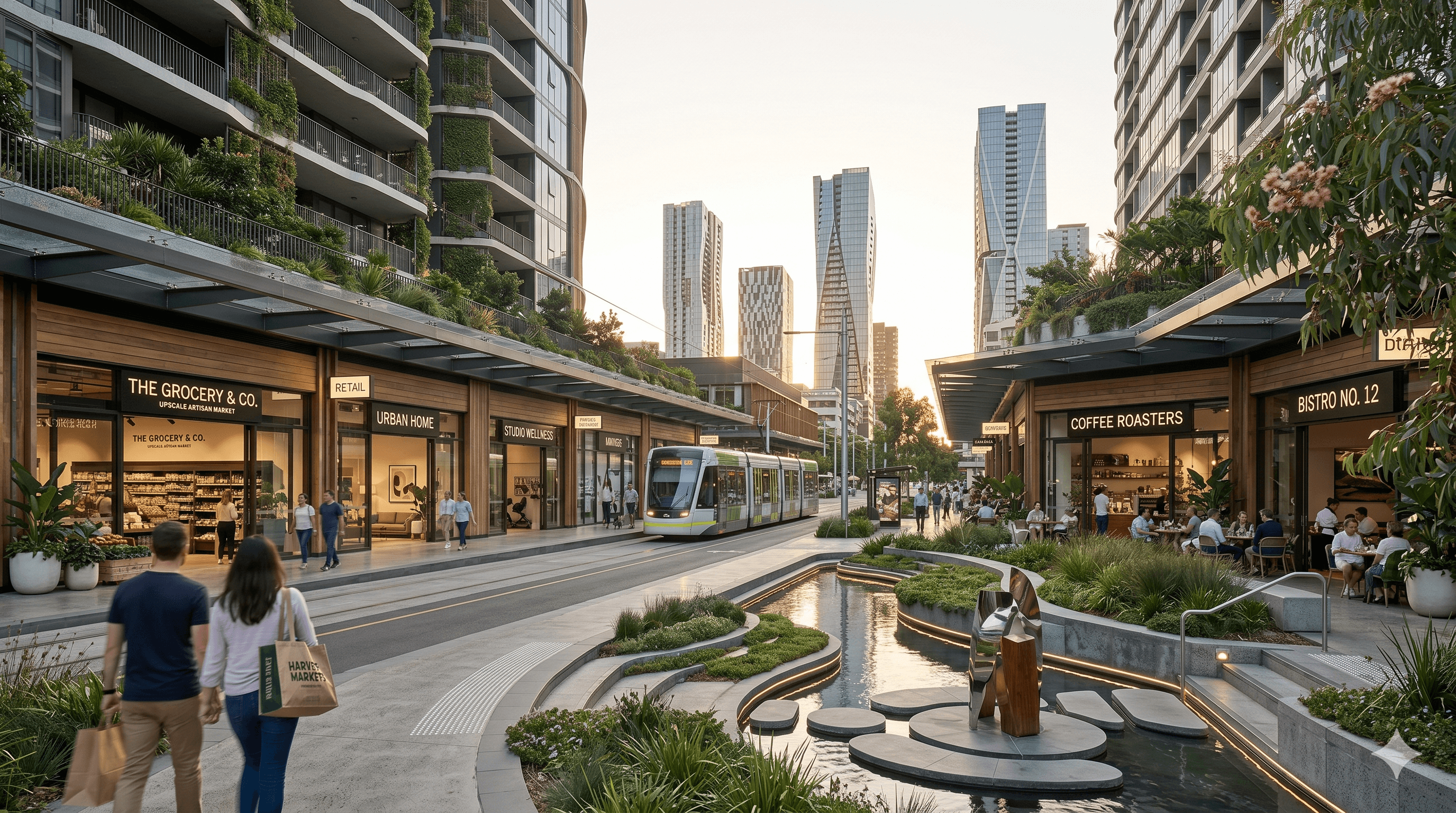
After leading Australia’s commercial property market’s recovery through 2025, the retail market in Australia is expected to maintain its momentum throughout 2026, with constrained supply, steady foot traffic recovery and rental growth to make it one of the standout performers across the Australian commercial property landscape.
Transaction activity is expected to pick up as investors recognise the sector’s recovery as genuine rather than temporary. From Brisbane’s shopping strips to Adelaide’s neighbourhood centres, from regional Victorian towns to fast-growing Queensland suburbs – wherever you have got population growth, steady jobs and not much new supply coming through, you have got the makings of a strong retail leasing market.
And right now, that description fits a lot of markets in Australia.
Changing Lease Preferences in Retail Property
If there is one thing that has fundamentally shifted how Australians approach retail leasing, it’s the fact that tenants want flexibility built into the deal from day one.
Some occupiers are delaying relocations or seeking more flexible lease terms, while others are gravitating towards outer precincts where overall occupancy costs are materially lower – though for many businesses, the current environment is enabling a more strategic, long-term approach to footprint planning.
Shorter initial terms with renewal options, landlord contributions to fit-out costs, and rent structures that reflect what the market is actually doing right now – these are the conversations happening every day in Australia’s real estate market. Tenants want the security of knowing their investment is protected, but they also want room to grow as their business changes. That balance is achievable – you just need the right people helping you find it.
For landlords, the message is equally straightforward: to remain agile and deliver spaces that combine flexibility, quality and sustainability is essential to attract and retain tenants in an increasingly competitive leasing environment. The landlords who fill their spaces and keep good tenants long-term are the ones who have understood this and adapted.
Australia’s retail property market heading into 2026 is in solid shape. Population growth is steady, consumer confidence is improving, new supply is limited, and foot traffic is coming back. The fundamentals are lined up in a way that creates genuine opportunity – for landlords, tenants and investors who know how to read the trends.
At NRG, that is exactly what we do. With more than 20 years of experience in delivering Tier 1 transaction and asset management services across Australia and internationally, we know this market inside out. Whether you are a landlord wanting to get the most out of your retail asset or a business looking for the right space to grow, we would want to have a conversation. Reach out to the NRG team today – we are here to help you make the most of what the Australian real estate market has to offer.
FAQs
What are the current commercial property leasing trends in Australia?
Australia’s commercial market is going through a broadening recovery in 2026. Retail is maintaining momentum, office space demand is shifting toward premium ESG-credentialed assets, and industrial sectors – particularly data centres and cold storage – are also experiencing strong growth.
How is commercial property leasing in Melbourne changing in 2026?
Melbourne’s Eastern Core has been experiencing sustained demand and healthy rental growth for commercial properties. Recovery is now broadening beyond core precincts, with the city’s Western Core expected to benefit from a thinning supply pipeline, making Melbourne an increasingly compelling leasing market for commercial properties.
What factors are shaping retail-focused commercial property leases in Australia?
Important factors influencing retail-focused commercial property leases in Australia include increased population growth, limited new supply of commercial real estate due to inflation in construction cost, rising consumer confidence, and structural shifts toward experience-driven retail. All of them are contributing to the increased rental pressure on retail leasing.
Are flexible lease terms becoming more common in Melbourne?
Traditional 5–10 year leases are no longer the benchmark. Recently, there has been increased popularity for shorter terms, break clauses, rent-free periods, and fit-out contributions among landlords, whose reasons could be traced to growing macroeconomic uncertainty and the growing presence of hybrid work patterns.
How do leasing trends influence retail businesses in Australia?
Retail businesses benefit as landlords modernise spaces and negotiate more. However, those retail players who are engaged in high-foot-traffic, service-based locations are likely to grow most, while large-format stores may experience pressure as tenants favour smaller, adaptable spaces with strong accessibility.
Is demand rising for commercial property lease in Melbourne locations?
Melbourne’s retail vacancy rate decreased by 0.8 percentage points to 4.1 per cent, reflecting improving conditions. Box Hill, Footscray, and Dandenong and other suburban corridors are also attracting tenants who are looking for lower costs and better accessibility.
Which retail sectors are driving commercial leasing growth in Australia?
Mushrooming of shopping centres, growth of the food and beverage segment, and experience-driven retail are fostering the growth of commercial leasing in the country.
-
 Back
Shop for Lease vs Shop for Sale: Which Is Better for Your Business?
- RETURN TO NEWS
-
Long-Term vs Short-Term Leases: Which Is Better for Your Medical or Retail Business?
Next
